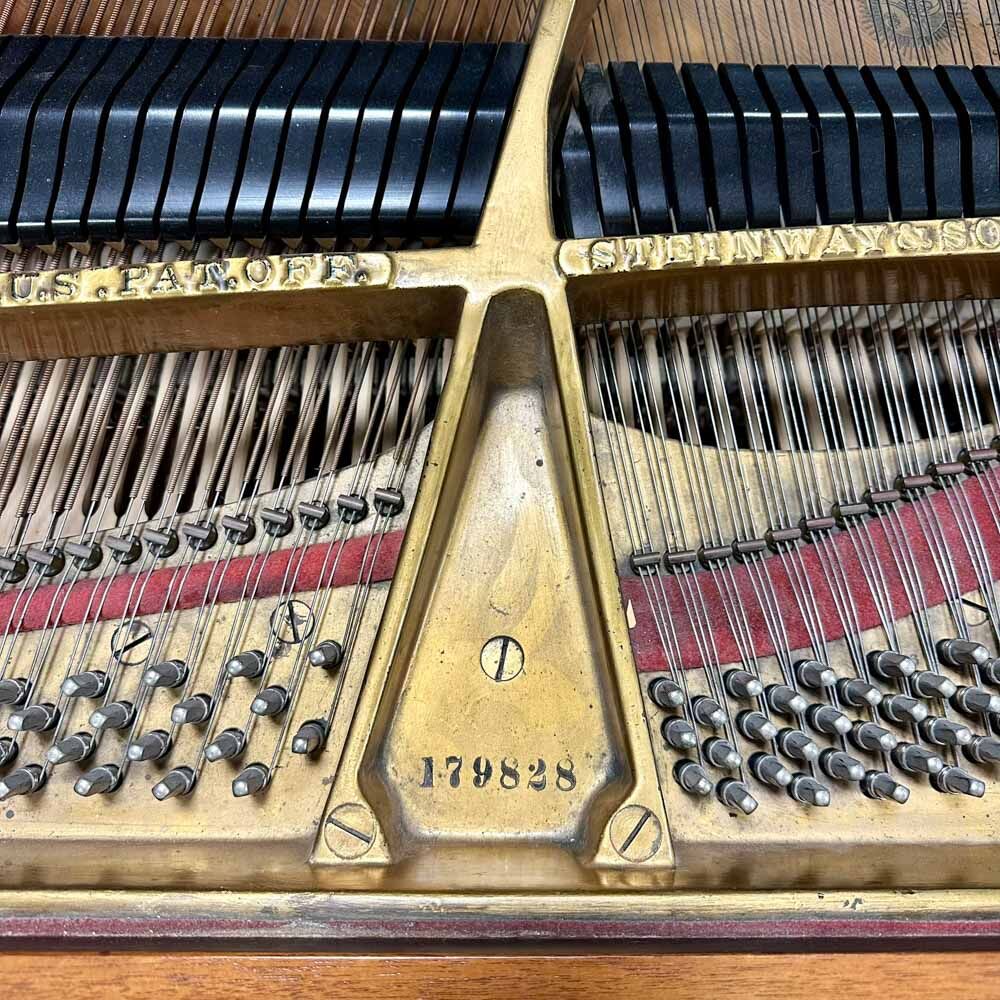
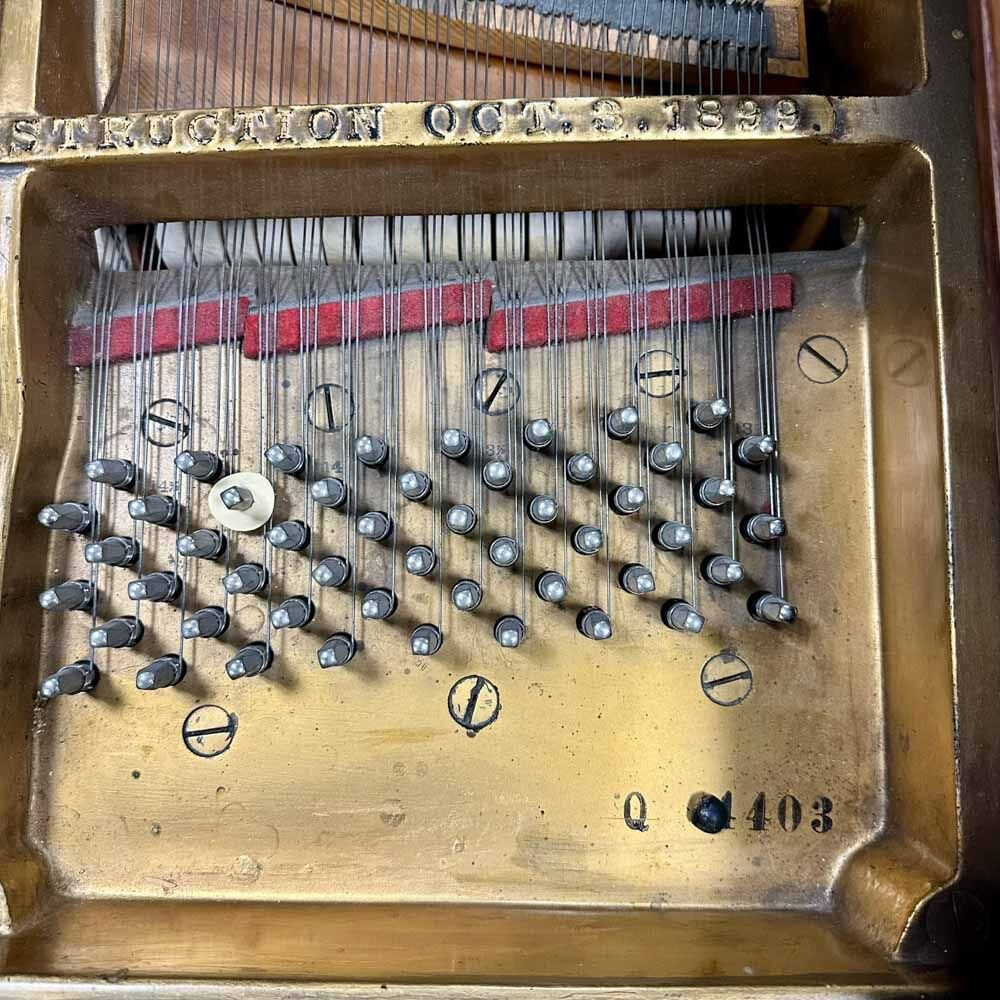
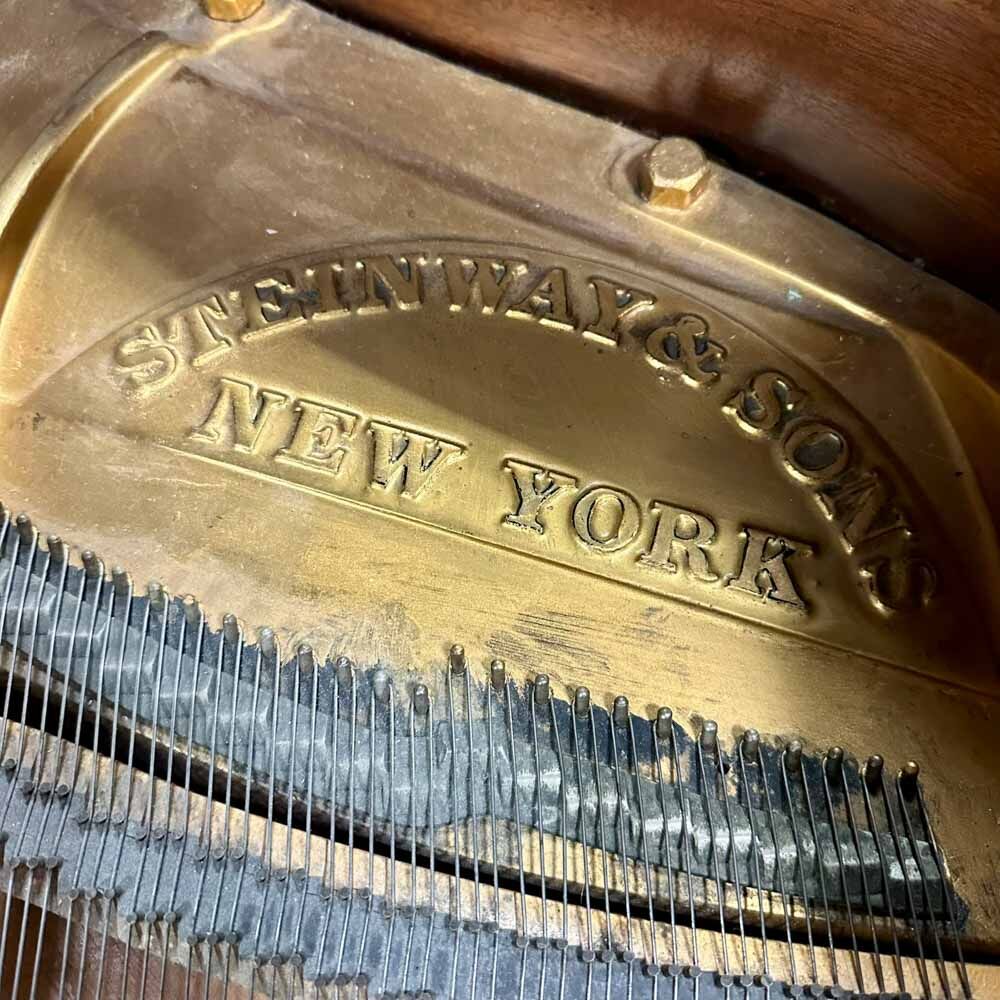
Pre-owned grand · Serial 179828
Steinway & Sons Model M, 1917
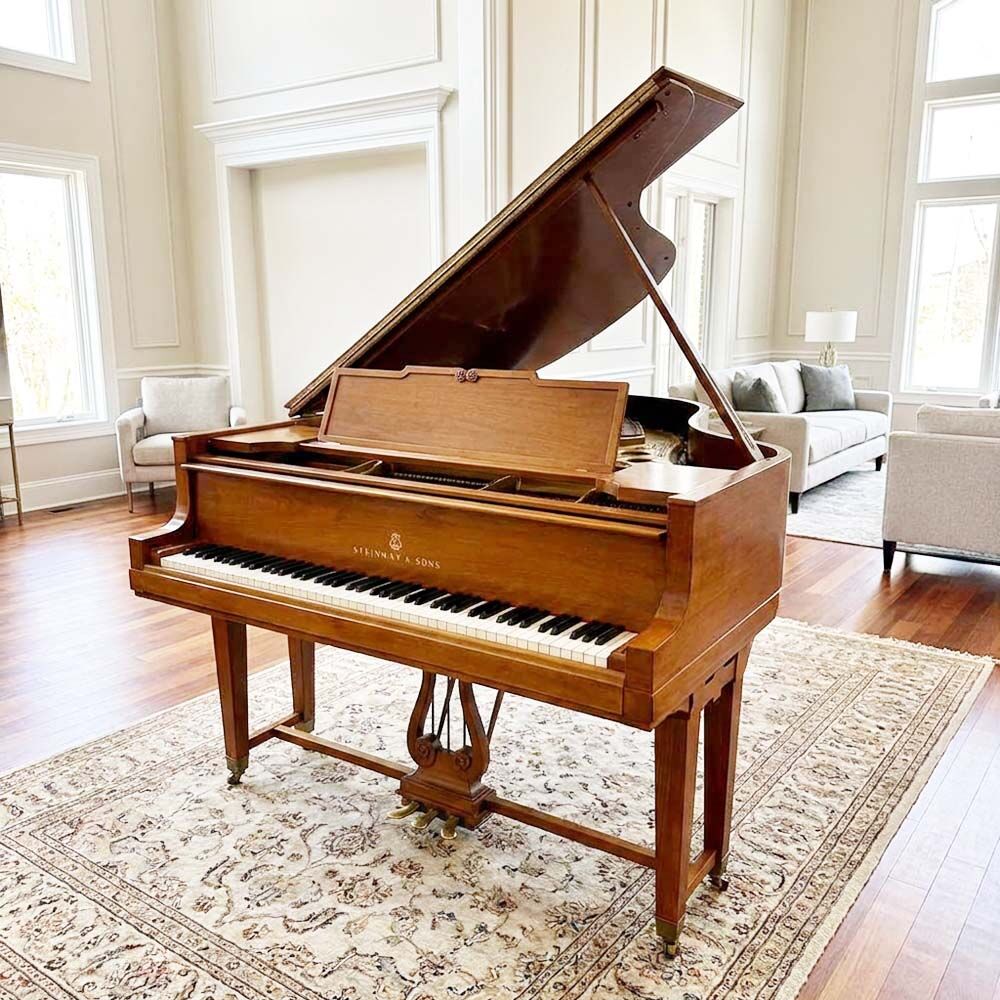
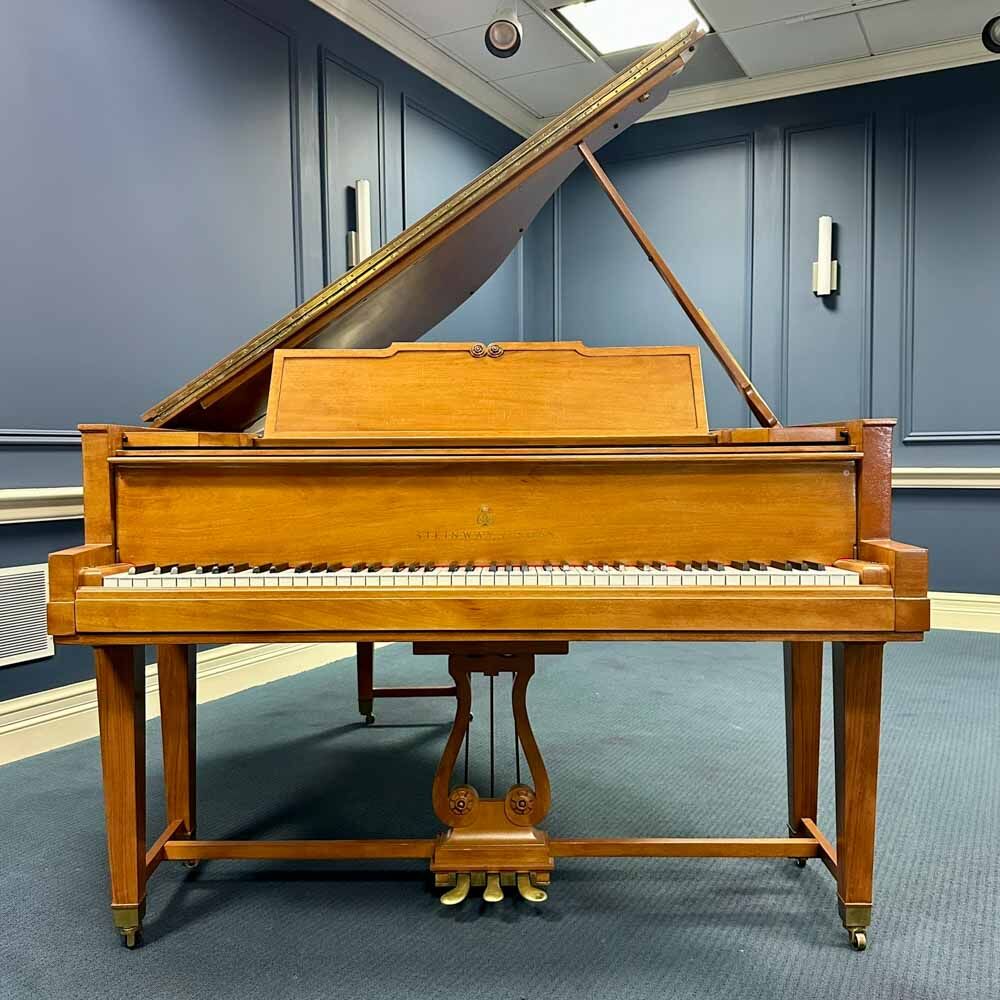
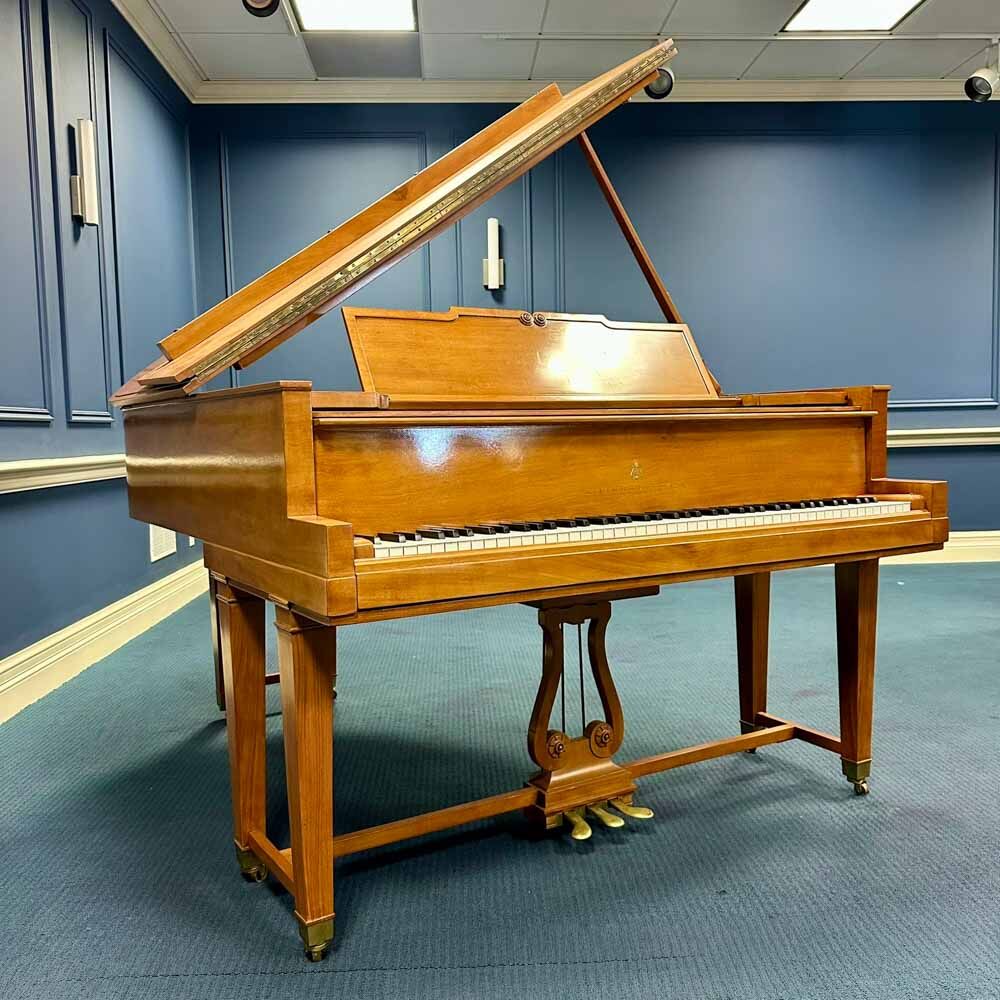
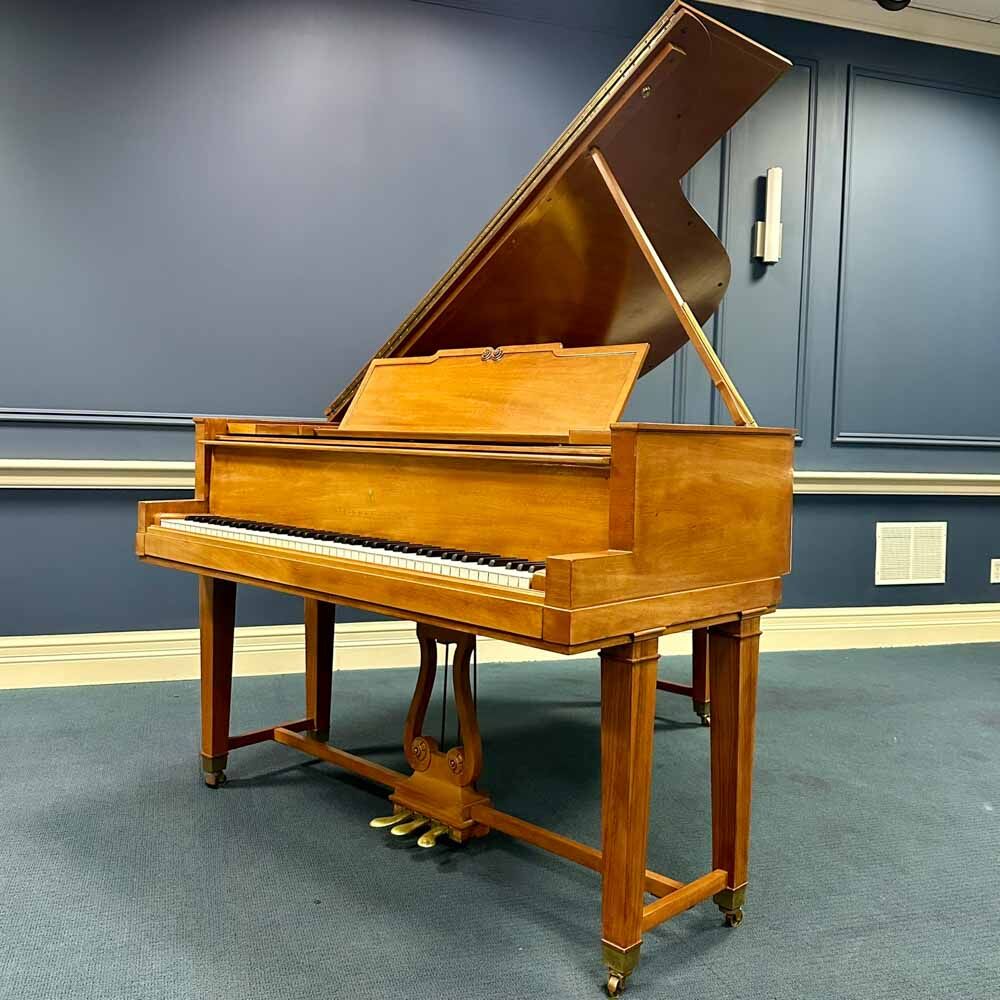
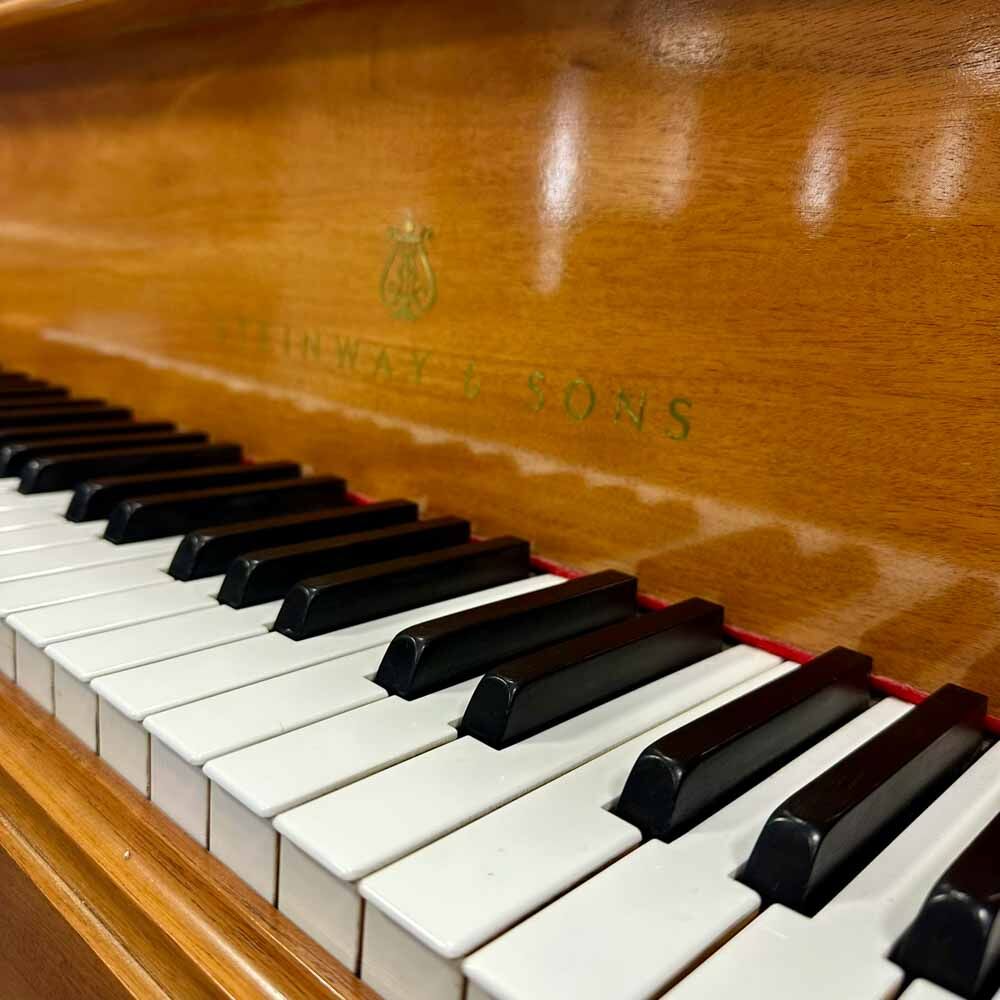
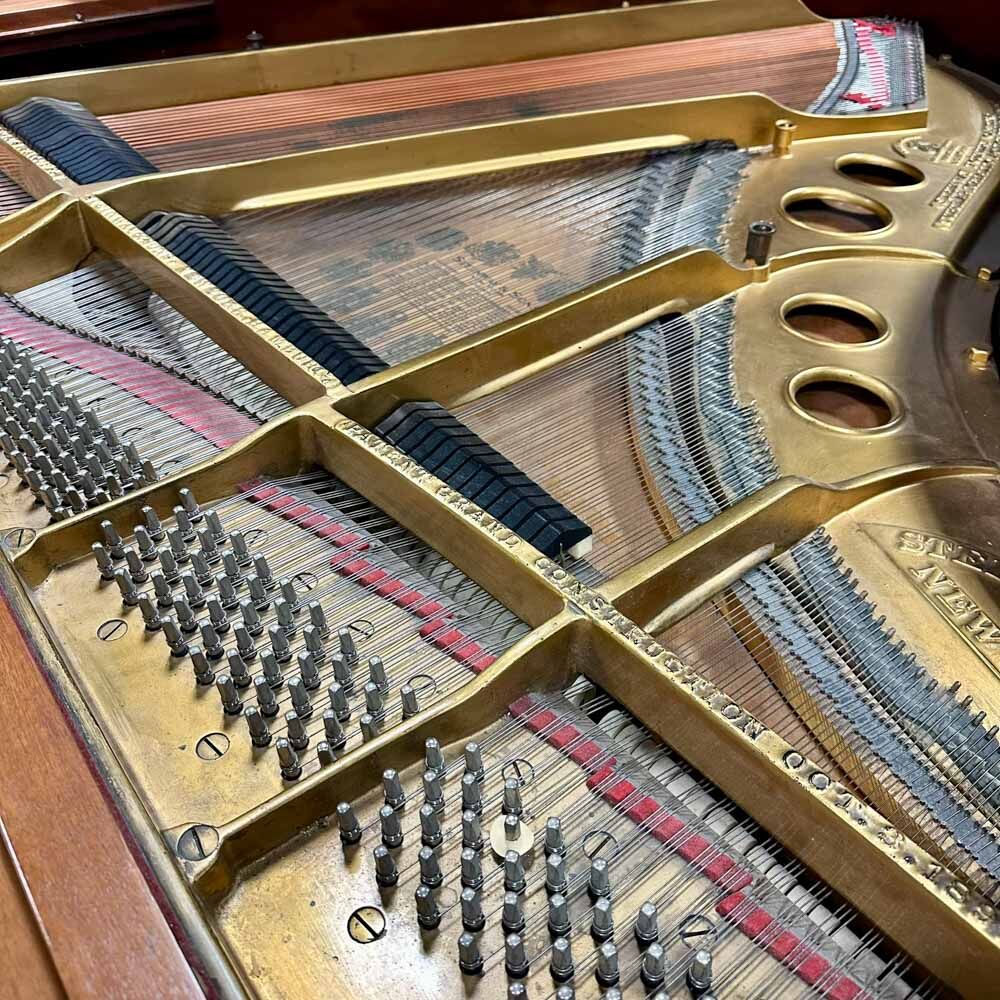
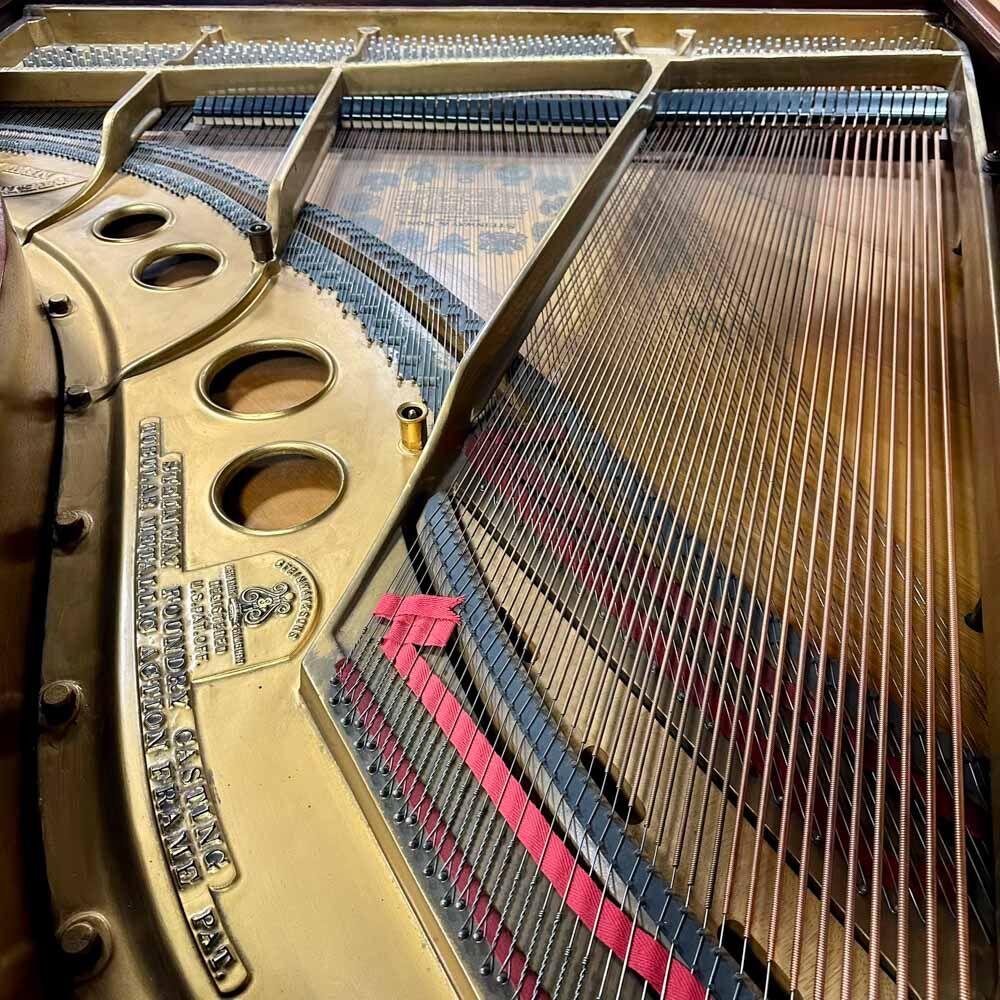
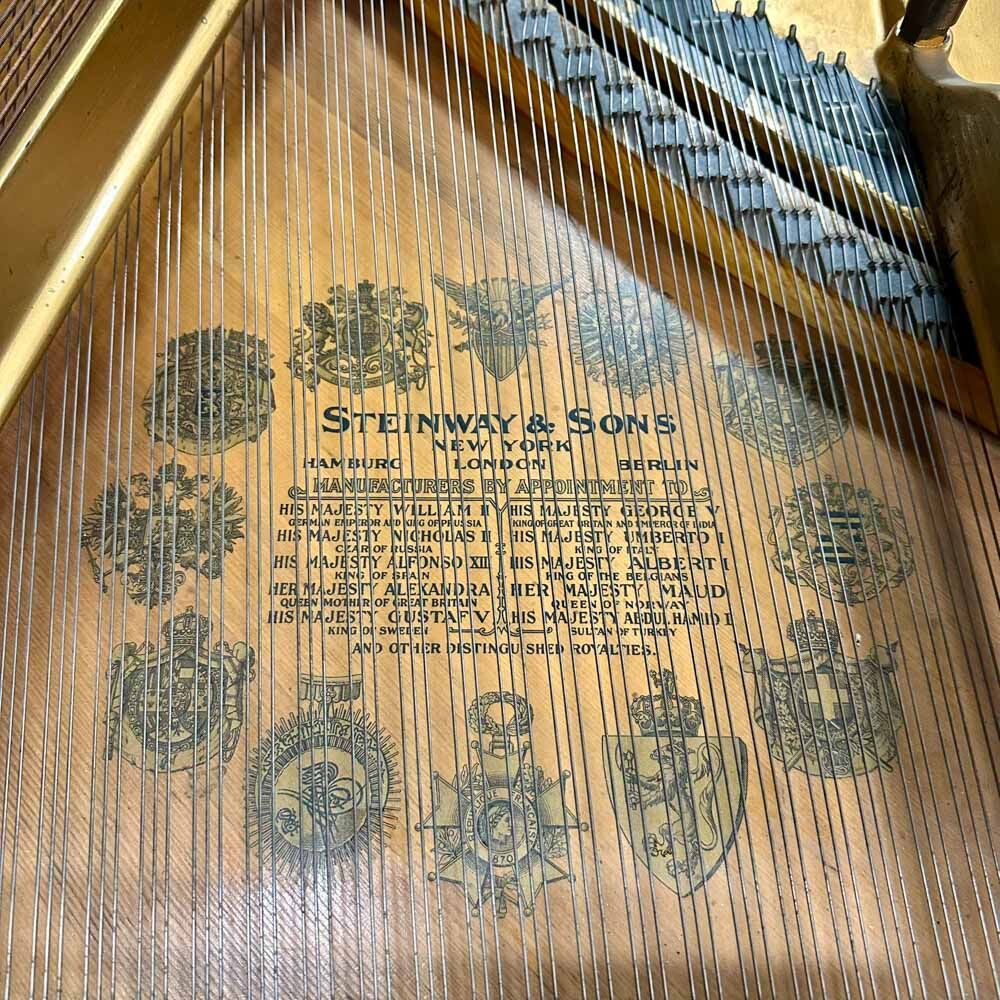
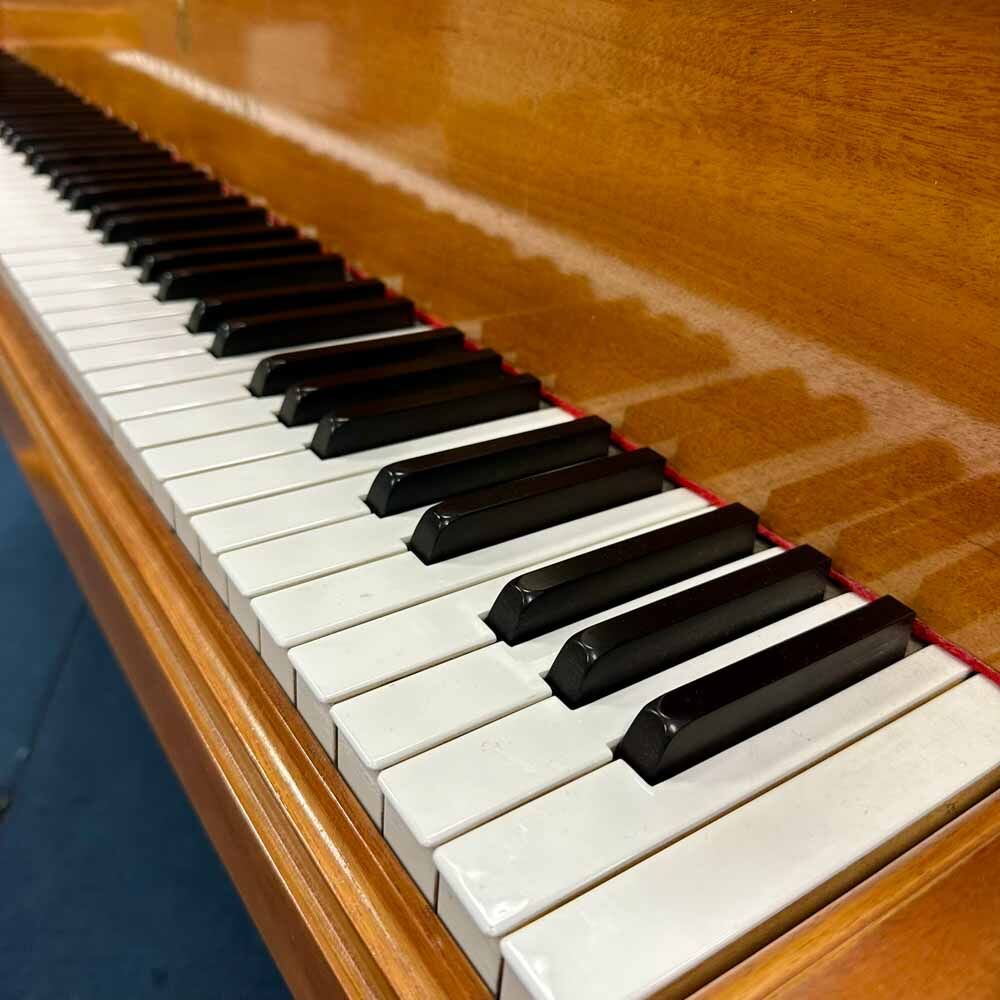
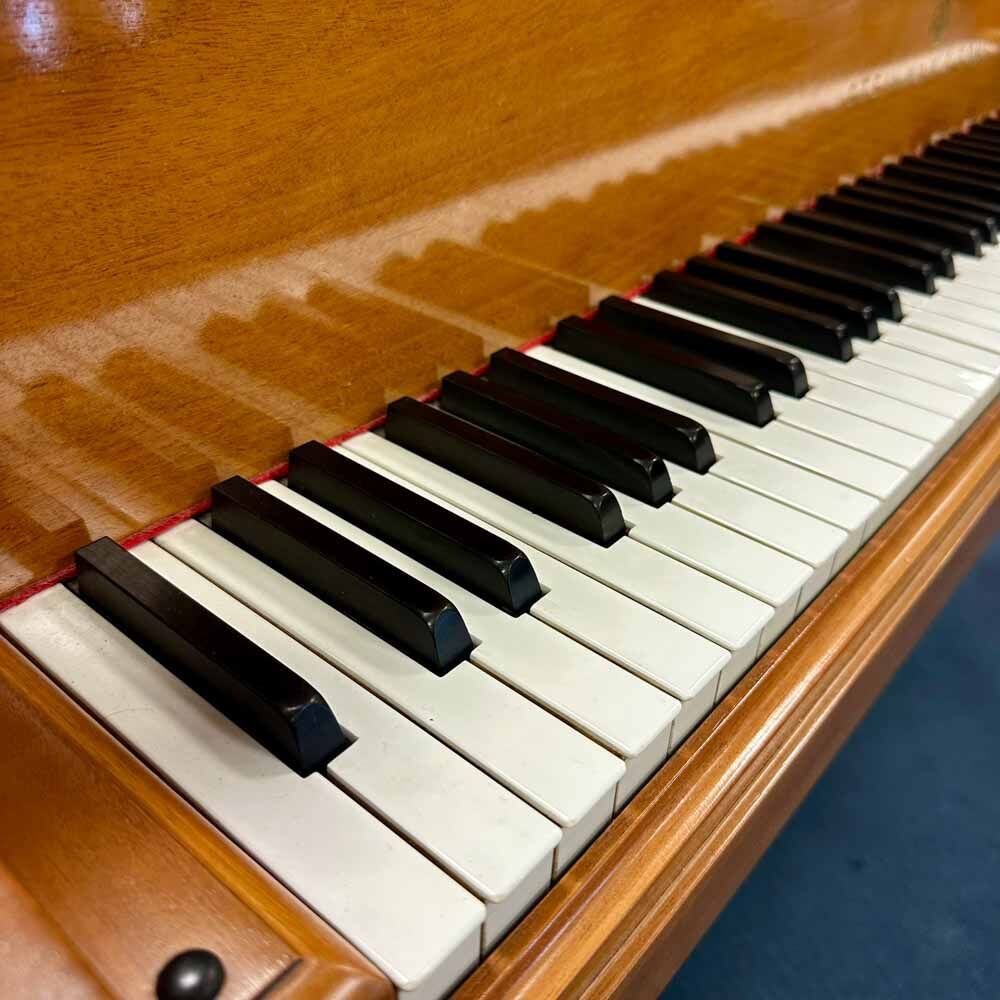
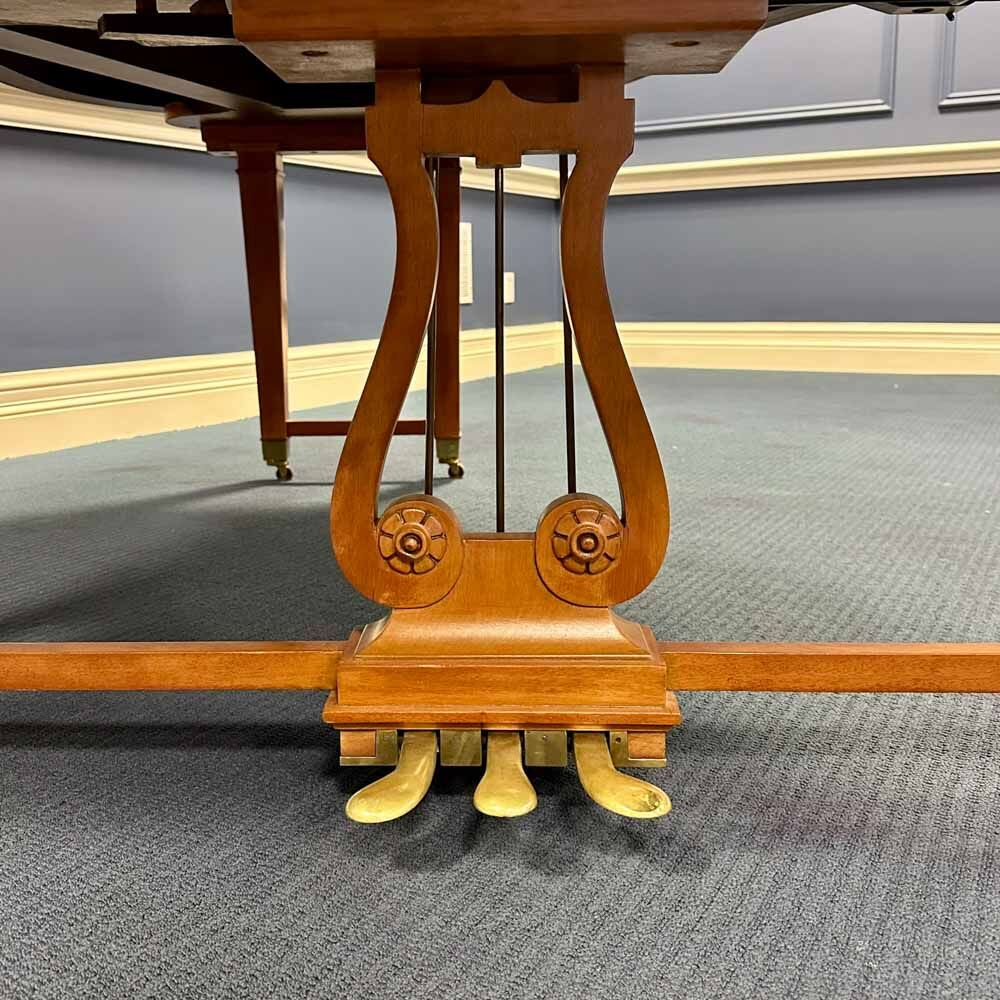
A 5’7″ Steinway medium grand built in 1917, in a satin mahogany case with square tapered legs and a lyre pedal assembly. It is on the floor at our Toronto showroom and ready to play.
Hear this exact piano
Two recordings of this piano, serial 179828, so you can hear it before you visit.
Classical piece
Pop piece
The Model M
Steinway & Sons introduced the Model M in 1911 as its medium grand, and it is still part of the line today. At 170 cm (5’7″) it fits a living room or teaching studio while keeping a full grand action.
This one was built in 1917, during the period many pianists call Steinway’s golden age.
How it sounds
Steinway’s sound starts with the rim, a continuous bent-maple case that gives the piano a dark, mid-range-focused voice. Notes have a strong fundamental and blend into one another, and the tone carries well to a listener across the room.
It is a forgiving sound, which is a large part of why Steinways are so common on stages and in studios. The touch tends to be a little heavier and shallower than the Japanese and European grands on our floor, so it is worth playing them side by side.
The Steinway tone profile
Tonal balance
A listening sketch, not a measurement: great projection to the listener, a blended and slightly narrow sound at the bench, a mid-range boost and an intentionally soft edge in the treble. Select a quality on the left to see how Steinway rates on it.
Projection
5 / 5What it measuresHow well the sound reaches a listener across the room, as distinct from what the player hears at the bench.
On a SteinwayThe top rating. The sound carries strongly into a hall or a living room, one reason Steinways are so often chosen for performance and recording.
Bass break
5 / 5What it measuresHow evenly the wound bass strings hand over to the plain-wire tenor.
On a SteinwayThe top rating. Lines moving through the lower middle of the keyboard stay even, with no audible seam.
Cabinet resonance
4 / 5What it measuresHow much the rim and case sing around each note.
On a SteinwayStrong. The continuous bent-maple rim adds weight and warmth around every note.
Soundboard resonance
4 / 5What it measuresThe bloom and body the soundboard adds to the tone.
On a SteinwayStrong bloom that gives chords their body and supports the dark, powerful sound Steinway is known for.
Sustain
4 / 5What it measuresHow long and how evenly a note carries after it is struck.
On a SteinwayNotes carry well, especially at the stronger dynamics of performance playing.
String resonance
3½ / 5What it measuresThe sympathetic halo created by other strings ringing along with the note.
On a SteinwayModerate. The tone centres on a strong fundamental and a few lively overtones, then falls away quickly rather than ringing in a long halo.
Tonal width
3 / 5What it measuresHow widely the sound spreads around you. Wide impresses in a large room; tighter is easier to control in a small or lively one.
On a SteinwaySlightly narrow at the bench, so the sound feels focused to the player while still projecting outward to listeners.
Case noise
3 / 5What it measuresSound from the case itself that is not part of the note. On this measure, lower is cleaner.
On a SteinwayModerate. Some of the case's own sound blends into the tone and adds to its warm, weighty character; makers that rate lower sound more transparent.
Tone origin
2 / 5What it measuresWhether the sound seems to come from a single point on the instrument or from the whole piano at once.
On a SteinwayBlended. The sound washes from the whole instrument, which makes it forgiving to play. The treble is intentionally a little less precise.
Ratings from our piano specialists' tonal characteristics chart, which compares top-tier makers on the same scale of 1 to 5. They describe Steinway's sound as a brand; every individual piano differs, especially at a hundred years old.
Curious how this sound compares with a C. Bechstein grand? We can set them up side by side so you hear the difference in one visit.
Book a side-by-sideInspected before it reached our floor
Every used piano we sell passes our 47-point certified pre-owned inspection before it goes on display. On this Model M, our technicians checked seven areas.
Soundboard
Cracks, crown and rib joints.
Action
Regulation, repetition and wear on moving parts.
Hammers
Felt condition, shape and voicing.
Keytops
Chips, levelling and key dip.
Strings
Tuning stability and corrosion.
Cabinet
Structure, joints and hardware.
Finish
Surface condition of the satin mahogany.
Want to know more about the condition of this instrument? Our piano team can walk you through what was checked and adjusted.
Ask our piano teamHow it compares
Other Steinway grands on our site, plus a Mason & Hamlin at a similar price. The two later Model Ms are listed at about $40,000, which makes this 1917 instrument the lowest-priced Steinway grand currently listed on our Canadian site.
| Piano | Brand | Year | Length | Finish | Serial | Price |
|---|---|---|---|---|---|---|
| Model M This piano | Steinway & Sons | 1917 | 5'7" (170 cm) | Satin mahogany | 179828 | $22,500 |
| Model M | Steinway & Sons | 1936 | 5'7" (170 cm) | Satin mahogany | 284728 | $40,000 |
| Model M | Steinway & Sons | 1967 | 5'7" (170 cm) | Satin mahogany | 404911 | $39,993.75 |
| Model L | Steinway & Sons | 1926 | 5'10½" (179 cm) | Satin ebony | 247720 | $59,995 |
| Model AA | Mason & Hamlin | On request | 6'4" (193 cm) | Satin walnut | 14531 | $24,850 |
Torn between two of these? Tell us about your room and how you play, and we will help you narrow it down.
Help me chooseIncluded with this piano
- Matching bench
- Complimentary tuning
- Free delivery in the GTA
- 10-year parts and 1-year labour warranty
- 47-point certified pre-owned inspection
Play this piano before you decide
No two Steinways sound the same, and a century of playing shapes each one further. Book a virtual piano audition and we will play this exact piano for you live on video, or come in and play it yourself, ideally next to the other Steinways listed above. Our piano team answers the phone directly.
Questions
How do you know this piano was built in 1917?
Steinway & Sons numbers every piano in one sequence. Serial 179828 falls at the turn from 1916 to 1917 in Steinway’s published serial-number records.
Can this piano be delivered outside the GTA?
Yes. Used pianos can be delivered anywhere in Canada. Delivery within the GTA is free; for other areas, call our piano team for a quote.
What does the warranty cover?
Parts are covered for 10 years and labour for 1 year. Our piano team will walk you through the full terms before you buy.
Is a piano this old a sensible purchase?
It depends on the condition of the soundboard, strings and action, which is why every used piano we sell is inspected before it reaches the floor. Play it in person, and ask our team what was checked and adjusted on this one.
Do you take trade-ins?
Yes. Tell us about your current piano and we will give you an appraisal you can put toward this one.
Have a question we did not cover? Ask us directly